You're Being Set Up: How Sportsbooks Use Line Movement and Promotions to Bait You Into the Wrong Side
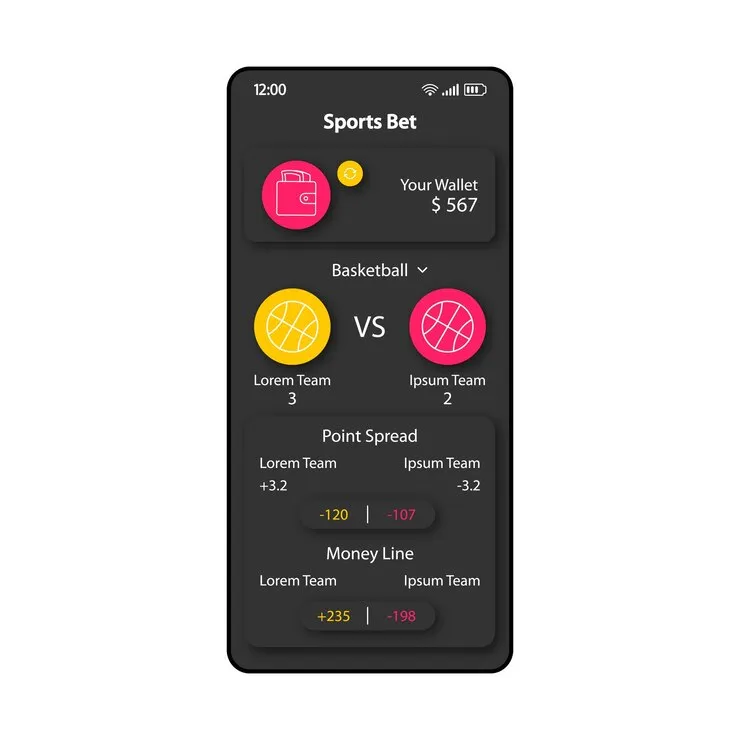
Photo: sportsbook betting app interface line odds movement screen, via img.freepik.com
There's a version of sports betting wisdom that sounds reasonable on the surface: follow the sharp money. Watch the lines, see which way they move, and bet in the direction of the sophisticated action. It's not bad advice, exactly. But it's incomplete advice—and sportsbooks know it.
Because here's what that conventional wisdom misses: not every line movement reflects sharp money. Some of it is theater. And the sportsbooks that built the platforms you're betting on are sophisticated enough to use the appearance of sharp action as a tool to move recreational money exactly where they want it.
This is the reverse trap. And once you know how to spot it, the whole game looks different.
How Sportsbooks Actually Make Money (It's Not What Most Bettors Think)
The popular mental model of sportsbook profitability goes something like this: the book takes equal action on both sides, collects the vig, and profits regardless of outcome. Clean, simple, symmetrical.
Reality is messier. Books don't always get balanced action, and they don't always want it. On certain games—typically high-profile matchups with massive public betting interest—sportsbooks are willing to take on significant liability if they believe the public is overwhelmingly wrong. The Super Bowl is the clearest example. Books routinely root against the popular side because casual bettors drive enormous one-sided action on the more recognizable team.
This creates a strategic incentive: if the book knows where the public money is going, and believes that money is likely to lose, the optimal play is to encourage more of it. More bad money on the wrong side means more profit when the outcome goes the other way.
The mechanics of how they do that are subtle, deliberate, and worth understanding.
The Manufactured Line Move
Line movement is supposed to be a signal. When a line moves significantly, conventional wisdom says smart money has come in on one side, forcing the book to adjust. And sometimes that's exactly what's happening.
But books can also move lines strategically—not because sharp money has forced their hand, but because they want to create the impression of sharp action to attract public money on the other side.
Here's a simplified version of how it works: A book opens a game with Team A at -3. They move the line to -4.5, making it look like sharp action has come in on Team A. Recreational bettors, seeing the move and interpreting it as a smart-money signal, pile onto Team A at -4.5. The book now has exactly the exposure it wanted on the side it believes will lose—at a number that's less favorable to bettors than the opening line.
This is sometimes called a "steam move" that was never really steam. The book manufactured the signal to attract the wrong-side public money it wanted.
Promotions as a Targeting Mechanism
Bonus offers and featured bet placements are another vector for this kind of manipulation. Next time you log into your sportsbook, pay attention to which games are prominently featured on the home screen, which parlays are pre-loaded as "popular" suggestions, and which bet types are being pushed in promotional emails.
These placements aren't random. They're informed by data. The book knows which games have the most recreational interest, which teams casual bettors favor emotionally, and which bet types generate the most losing action long-term. "Boosted" odds on a popular team aren't generosity—they're a marketing investment designed to attract volume on a side the book is comfortable holding.
When a sportsbook runs a promotion specifically boosting the odds on a marquee team that everyone loves, ask yourself: why is the book comfortable giving you better odds on this side? Usually, the answer is that they're confident enough in the outcome—or the public's tendency to bet this team anyway—that the promotional cost is worth the volume it drives.
Warning Signs You're Being Targeted
Recognizing when you're being set up isn't always straightforward, but these patterns should raise flags:
The line moves against public betting percentages. If 75% of tickets are on Team A but the line moves toward Team A (making it more expensive), something unusual is happening. Either sharp money is on Team B, or the book is engineering the move to attract more public money at a worse number.
A "boost" appears on a game with heavy public sentiment. Promotional boosts on teams that everyone already loves are almost never gifts. They're volume drivers designed to increase the book's exposure on a side it's comfortable holding.
The same game appears in multiple "featured" placements simultaneously. When a game shows up in the app's featured section, in a suggested parlay, and in a promotional email on the same day, that's coordinated placement. The book wants action on this game—and likely on a specific side of it.
The opening line looks off. If a game opens at a number that seems clearly wrong—too favorable to one side—it may be a trap designed to attract early action that the book then moves away from, leaving late-money bettors at a worse number.
How to Reverse-Engineer the Book's Incentives
The antidote to the reverse trap is learning to ask a different question. Instead of "where is the money going?" ask "why does the book want me to bet this side?"
If you can identify a clear reason why the sportsbook would benefit from your bet—heavy public sentiment on your side, a promotional push, featured placement—that's a signal to slow down and think harder. It doesn't automatically mean you're wrong, but it means you should be able to articulate a genuine reason for your bet that goes beyond following the crowd.
Sharp bettors call this process "fading the book's incentives." When the book is clearly trying to attract money on one side, the contrarian instinct is to look at the other side more carefully—not reflexively, but analytically. Is there genuine value there? Has the public sentiment created a distorted number?
Meanwhile, the best protection against being manipulated by manufactured line moves is developing your own number. Before you look at what the book is offering, decide what you think the line should be. If the posted line is significantly different from your number, that's either an opportunity or a warning—and knowing which requires your independent analysis, not just the book's signal.
Play Smart, Not Just Bold
At VNI9Bet, the whole point is to play bold and bet smart. Those two things aren't in conflict—but they require you to stay aware of whose interests are being served when a line moves or a promotion appears.
The sportsbook is a sophisticated opponent. It has more data than you, a larger team, and a business model built on exploiting predictable bettor behavior. The best edge you can develop is simply refusing to be predictable—doing your own analysis, questioning the book's incentives, and betting based on genuine value rather than engineered signals.
The reverse trap only works on bettors who aren't looking for it. Now you are.