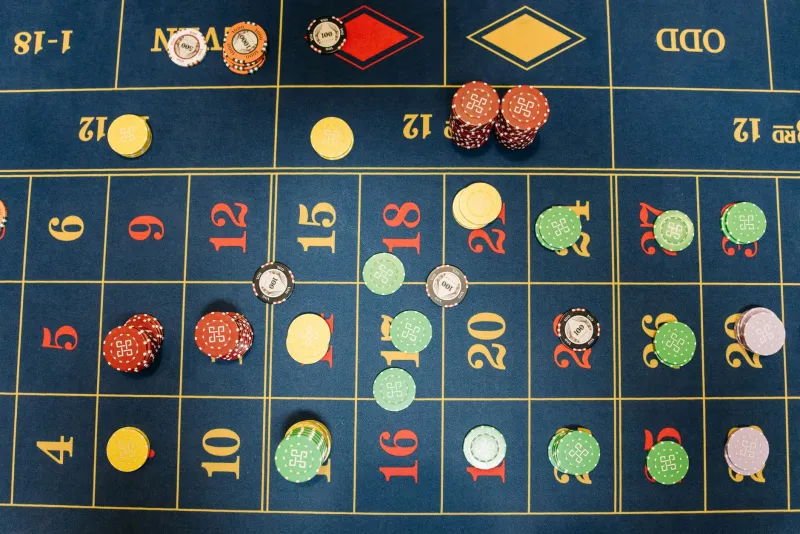
Riding High, Betting Reckless: How Big Wins Set Up Even Bigger Losses

There's a specific kind of confidence that only shows up after a big win. It's not cockiness exactly — it's something quieter and more dangerous. It feels like clarity. Like you've figured something out. Like the next bet is practically already won.
That feeling is a trap. And the scary part? It's designed to feel like the opposite.
At VNI9Bet, we talk a lot about playing bold and betting smart — and those two things only work together when you understand what's happening inside your head after a good run. Because the moment most casual bettors start losing control isn't when they're down. It's when they're up.
The Anatomy of a Post-Win Spiral
Here's how it usually plays out. You hit a nice parlay on Sunday. Maybe you ran a blackjack session that just clicked. You're up a solid amount — more than you expected — and you feel genuinely good about it. You walk away, but the next day you're already thinking about the next session.
Except this time, your standard unit feels too small. You just proved you can win bigger, right? So why not size up a little? And hey, you're still playing with "house money" anyway.
That last phrase — house money — is one of the most expensive ideas in all of gambling psychology. Behavioral economists Richard Thaler and Hersh Shefrin documented this decades ago. They found that people treat money differently depending on how it was acquired. Winnings feel less "real" than money you earned from a paycheck, so people are far more willing to gamble them away recklessly.
The result? You bet more aggressively, you lose what you won, and then — because you're now frustrated — you dip into your actual bankroll to try to get back to even. One good Sunday becomes a bad week before you even realize the spiral started.
Why Hot Streaks Are the Exact Moment to Pump the Brakes
This might feel counterintuitive. If you're running hot, shouldn't you press the advantage?
In theory, sure — if you had a genuine, sustainable edge that was generating those wins. But most winning streaks in casino games and sports betting have a significant luck component baked in. Variance is always operating in the background, and it doesn't care how good last week felt.
Actually, the math works against you here in a specific way. After an unusually good run, regression to the mean becomes more likely, not less. That's not bad luck — that's just how probability works. Streaks end. The longer you ride one without adjusting your behavior, the more exposed you are when the correction arrives.
Sharp bettors know this. They don't increase their unit sizes because they had a good week. They stick to a fixed percentage of their bankroll — typically somewhere between 1% and 3% per wager — and they keep that discipline regardless of recent results. Winning doesn't make them feel invincible. It makes them more careful, because they know the temptation to get sloppy is at its highest right now.
The Frequency Problem Nobody Talks About
Bet sizing isn't the only thing that creeps up after a win. Session frequency does too.
When things are going well, the natural impulse is to play more often. Why wouldn't you? You're winning. But increasing how often you play is just another form of raising your exposure — and it compounds the risk in ways people rarely stop to calculate.
Think about it this way. If you normally play three sessions a week and you bump that to six after a big win, you've doubled the number of opportunities for variance to catch up with you. You've also doubled the mental energy you're spending on wagering decisions, which tends to degrade the quality of those decisions over time. Fatigue and overconfidence are a rough combination at any sportsbook or casino table.
Setting session limits — and keeping them regardless of how good the last session felt — is one of the most underrated moves in smart bankroll management. It forces you to treat gambling like what it actually is: an activity with real financial stakes that deserves real structure.
Behavioral Finance 101 for the Everyday Bettor
A few concepts from behavioral finance are worth keeping in your back pocket every time you log in after a good run.
Loss aversion asymmetry. People feel losses roughly twice as intensely as equivalent gains. This means the pain of losing back your winnings — plus your original stake — hits harder than the joy of winning in the first place. The math of reckless post-win betting almost always leads somewhere that hurts more than it felt good.
Illusion of control. Winning makes people feel like they've mastered something. In games with a luck component, that feeling is largely an illusion. You can make better decisions, but you can't control outcomes. Confusing the two is expensive.
Recency bias. The brain overweights recent events when predicting the future. A few wins in a row makes the next win feel more likely than it actually is. Recognizing this bias doesn't eliminate it, but naming it gives you a fighting chance.
What Disciplined Bettors Actually Do After a Win
So what does the smart move look like in practice? A few things stand out.
First, log it and leave it. Track your win, update your bankroll figure, and step back. Give yourself at least 24 hours before your next session. This interrupts the emotional momentum that leads to reckless follow-up play.
Second, recalculate, don't inflate. If your bankroll grew after a good week, your unit size can technically increase slightly because it's still the same percentage of a larger total. That's different from arbitrarily deciding to bet bigger because you're feeling good. One is math. The other is ego.
Third, write down your next session's limits before you start. Decide your stop-win and stop-loss numbers in advance, when you're thinking clearly — not in the middle of a session when the adrenaline is making decisions for you.
Finally, treat every session as its own event. What happened last week is irrelevant to what's going to happen today. The cards don't know you're on a streak. The sportsbook's algorithm doesn't care that you nailed three straight parlays. Each session starts at zero, and playing like it does keeps you grounded.
The Discipline Gap Is Where Bankrolls Go to Die
The difference between bettors who build sustainable bankrolls and those who constantly reset to zero usually isn't talent or knowledge. It's the discipline gap — the space between knowing what to do and actually doing it when it counts.
That gap is widest right after a big win. The temptation is loudest, the logic feels the most justified, and the consequences feel the most distant. That's exactly when your process matters most.
Play bold means taking smart risks when the value is there. Bet smart means not letting a good week turn you into a different player than the one who earned it. Keep those two things in balance, and you've got a real shot at making the kind of progress that actually lasts.